
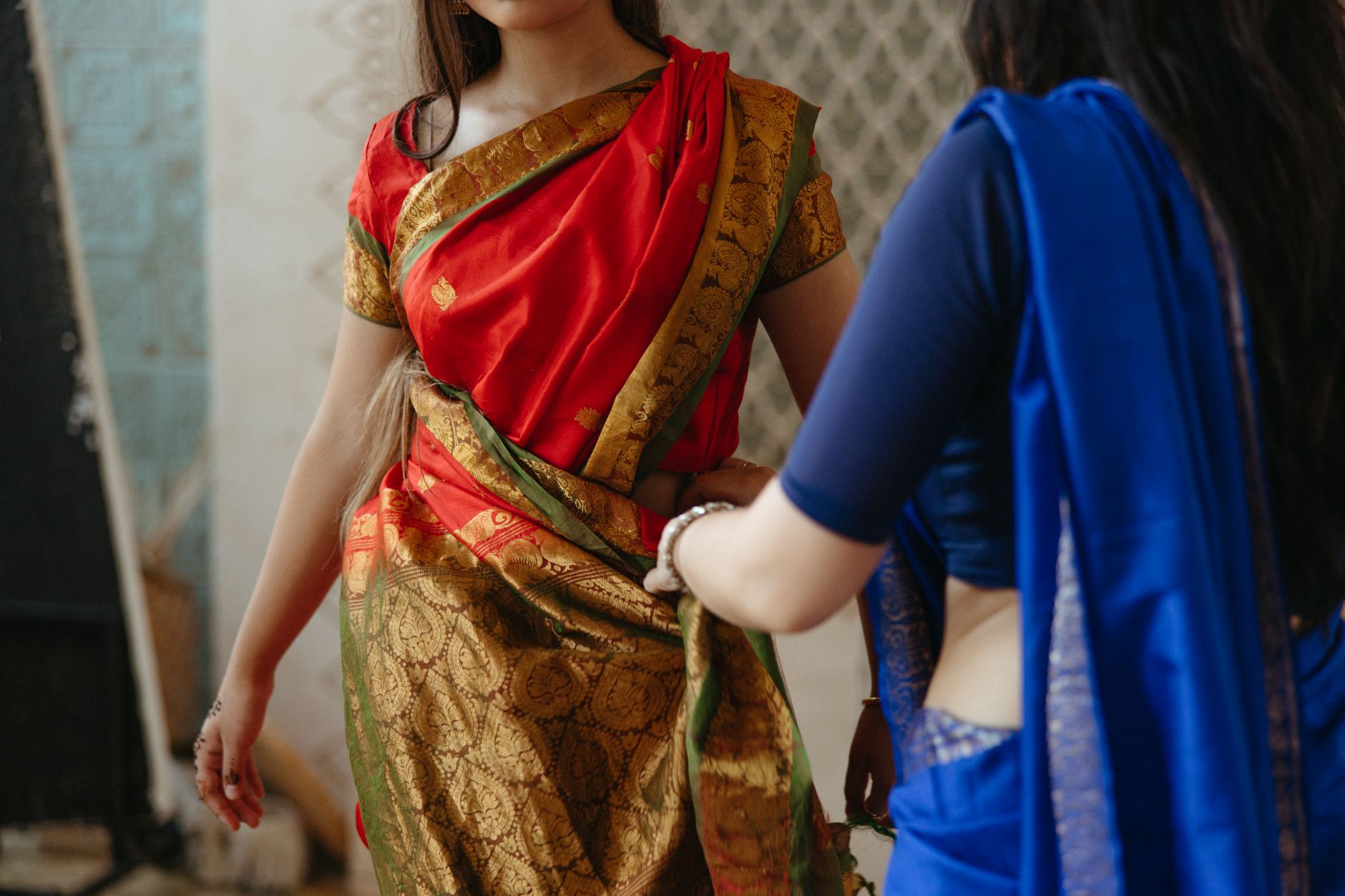
The saree is a timeless piece of clothing that has transcended generations, becoming a symbol of grace and elegance in various cultures, particularly in South Asia. Understanding how to wear a saree can enhance your wardrobe and boost your personal style. This guide will provide step-by-step styling tips and outfit ideas to help you wear a saree with confidence and flair.
Whether you’re dressing for a wedding, a formal event, or a casual day out, mastering the saree can empower you to embrace its versatile nature. Let’s explore the various styles, drapes, and accessories that can complement your saree experience.
How To Wear Saree?
To wear a saree effectively, start by selecting the right saree fabric, draping it properly, and pairing it with suitable accessories. The basic process involves wrapping the saree around your waist and securing it in place, usually with pleats at the front. Here are detailed steps to achieve the perfect saree look.
Choosing the Right Saree Fabric
The fabric of your saree can dramatically influence both the drape and comfort. Here are some popular saree fabrics to consider:
- Cotton: Ideal for casual wear due to its breathability and comfort.
- Silk: Perfect for formal occasions, silk sarees offer elegance and a beautiful sheen.
- Chiffon: Lightweight and delicate, making it an excellent choice for summer events.
- Georgette: Known for its flexibility and flow; suitable for both formal and festive occasions.
Step-by-Step Styling Tips for Wearing a Saree
Wearing a saree involves a few fundamental steps. Here’s a simple guideline to drape a saree correctly:
- Preparation: Choose a blouse that complements your saree. Opt for a fitted blouse, as it will enhance your silhouette.
- Start Draping: Hold the saree with the non-pleated end on your right side and drape it around your waist, ensuring it falls on your left side.
- Create Pleats: Take the loose end of the saree and make about six to seven pleats, each about 5 inches wide. Hold these pleats together and tuck them into your waistband at the center front.
- Secure the Saree: Ensure that the saree is secure by tucking it in well at the waist and along the length to avoid any draping issues.
- Paloo (Pallu) Styling: Drape the paloo over your shoulder. The way you style this part can vary depending on the look you want. You may allow it to hang down or create an over-the-shoulder style.
- Final Adjustments: Adjust the length and the way the saree sits on your body. Ensure the pleats are even and the drape is smooth.
Tailoring Your Blouse
Getting the right fit for your blouse is crucial as it complements the saree. Here are a few tips for blouse tailoring:
- Ensure the shoulder seams align with your natural shoulder line.
- The bust area should fit snugly without being uncomfortable.
- Choose sleeve styles that complement your saree and body shape, such as cap sleeves, three-quarter sleeves, or sleeveless.
Outfit Ideas for Saris
Your saree can be styled in numerous ways to suit different occasions. Here are a few outfit ideas:
1. Casual Day Out
For a comfortable yet stylish look, opt for a cotton or linen saree in light colors or floral patterns. Pair it with:
- A simple cotton blouse in a matching solid color.
- Comfortable sandals or juttis.
- Minimalist accessories like stud earrings.
2. Formal Event
For a wedding or formal gathering, choose a silk or georgette saree in rich hues such as burgundy or teal. Complete the look with:
- A tailored blouse with intricate embroidery.
- Statement jewelry, like chandelier earrings and a matching neckpiece.
- High-heeled sandals to elevate your outfit.
3. Evening Party
An embellished chiffon saree will work wonderfully for an evening party. Pair it with:
- A designer blouse with intricate work or sheer fabrics.
- Glitzy accessories, such as a clutch and cuff bracelets.
- Bold makeup to match your glamorous look.
4. Workplace Appropriate
If you want to wear a saree to work, choose a modest cotton or silk saree in pastel or neutral colors. Combine it with:
- A structured blouse that provides a professional look.
- Simple flats or low-heeled shoes.
- Minimal jewelry like a watch and stud earrings.
Color Coordination and Patterns
The color and pattern of the saree are essential elements to consider for your overall look. Here are a few guidelines:
- Solid Colors: These are timeless and can easily be accessorized with patterned blouses or jewelry.
- Patterns: Floral and geometric patterns can add a fun touch but should be balanced with simple blouses.
- Color Contrast: Ensure your blouse color contrasts or complements the saree nicely for a cohesive look.
Accessorizing Your Saree
The right accessories can elevate your saree and tie the entire look together. Here are ideas for accessorizing:
Jewelry
- Necklace: Choose between statement pieces or delicate chains depending on the saree’s embellishments.
- Earrings: Long earrings can elongate the neck when wearing a saree with an open neckline.
- Bangles: Layering bangles can add a festive touch to your saree look.
Bags and Footwear
- Bags: Opt for clutches for formal occasions and tote bags for casual ones.
- Footwear: Choose shoes that complement your outfit; sandals for casual wear and heels for formal occasions.
Seasonal Dressing with Sarees
Adapting your saree style to the seasons can enhance comfort and aesthetic appeal. Here’s how to dress for the seasons:
Summer
- Opt for lightweight fabrics like cotton or chiffon.
- Choose bright, vibrant colors or light prints to reflect the sunny vibe.
Winter
- Consider heavier fabrics like silk or velvet to stay warm.
- Layer with a long jacket or shawl that complements your saree.
Garment Care for Sarees
Proper care for your saree can extend its life and maintain its beauty. Here are some general care tips:
- Washing: Always check the care label. Hand wash delicate sarees with mild detergent.
- Storage: Store sarees in a cool, dry place, preferably in cotton bags to prevent dust accumulation.
- Ironing: Iron your saree on a low setting, and always place a cotton cloth between the iron and the saree to avoid direct contact.
Fashion History of the Saree
The saree has a rich and storied history, dating back thousands of years in the Indian subcontinent. It is more than just an article of clothing; it represents cultural heritage and identity. Originally, sarees were unstitched garments worn in various drapes depending on the region, and they have evolved to include modern interpretations and embellishments.
Shopping Tips for Sarees
When shopping for sarees, consider the following aspects:
- Quality: Look for authentic fabrics and craftsmanship to ensure longevity.
- Fit: Pay attention to the saree length and width to match your height and body type.
- Budget: Determine your budget beforehand and explore options accordingly; sarees come in various price ranges depending on materials and brand.
Understanding how to wear a saree allows you to express your individuality and embrace this beautiful garment in various settings. Remember, confidence is key when you wear any outfit, and the saree is no exception. Experiment with different drapes, styles, and accessories until you find what feels right for you.
Try combining a favorite saree with a complementary blouse and accessories, focusing on your comfort and style preferences. For additional insights, explore more about what a saree is at this guide and learn how Indian films shape fashion trends at this article.