Knowing how to measure yourself correctly is essential for creating a wardrobe that fits and flatters your unique shape. When you measure yourself, you gain insights into your body proportions, which helps you select garments that align with your personal style. This guide will break down the steps to measure yourself, essential body areas to focus on, and how to use these measurements to refine your wardrobe.
Whether you’re curating a capsule wardrobe, shopping for a special occasion, or simply seeking more fit from your clothing, accurate measurements are crucial. This thorough guide will help you understand the process and significance of measuring yourself and provide practical tips to ensure all your future fashion choices feel just right.
How to Measure Yourself?
To measure yourself effectively, you’ll need a flexible measuring tape, a notepad, and a pen. Additionally, wearing fitted clothing will help you get the most accurate measurements. Follow these steps carefully to capture each essential dimension.
Essential Measurements to Take
Bust Measurement
To measure your bust, follow these steps:
- Wrap the measuring tape around the fullest part of your bust. Make sure the tape is snug but not tight.
- Keep your arms relaxed at your sides. Ensure the measuring tape is level across your back.
- Record the measurement while exhaling to get the most accurate number.
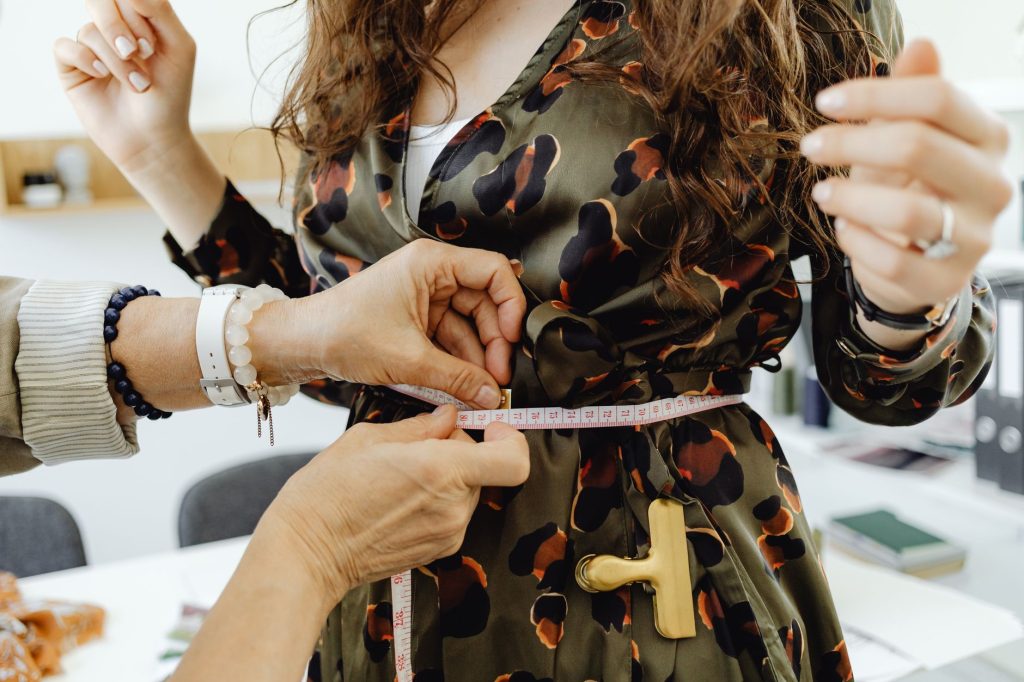
Waist Measurement
Your waist measurement is crucial for determining the fit of skirts, dresses, and tailored trousers:
- Locate your natural waistline, which is the narrowest part of your torso, usually above your belly button.
- Wrap the measuring tape around your waist while ensuring it remains parallel to the ground.
- Keep it comfortably snug and record the measurement.
Hip Measurement
To achieve the right fit for pants and fitted skirts, measure your hips:
- Stand with your feet together and wrap the measuring tape around the fullest part of your hips.
- Make sure the tape is level and not digging into your skin.
- Record the measurement without pulling the tape too tight.
Inseam Measurement
The inseam measurement helps determine the appropriate length for pants:
- Stand with your feet shoulder-width apart.
- Using a pair of pants that fits well, measure from the top of the inner thigh down to the bottom of the ankle.
- For accuracy, this measurement is ideally taken barefoot.
Shoulder Width Measurement
Knowing your shoulder width can aid in selecting blazers or tailored tops:
- Measure from the edge of one shoulder to the edge of the other shoulder while staying straight across the back.
- Ensure you maintain a straight line, and record your measurement.
Thigh Measurement
This measurement is essential for getting the right fit in pants:
- Stand with your feet slightly apart.
- Measure around the fullest part of your thigh. Ensure the tape is flat against your skin but not constrictive.
- Record your thigh measurement carefully.
Arm Length Measurement
Measuring your arm length can help when shopping for shirts or jackets:
- Start at your shoulder and measure down to your wrist.
- Keep your arm relaxed and slightly bent during the measurement.
Using Your Measurements
Once you have captured all your measurements, it’s time to put them to good use. Here are some practical ways to utilize your results:
Find Your Clothing Size
Different brands can have varying size charts. Use your measurements to identify where you fit on those charts:
- Compare your bust, waist, and hip measurements to the size guide provided by the brand before purchasing.
- It’s advisable to look at both regular and plus-size lines, depending on your measurements and fit preferences.
Tailoring and Alterations
Accurate measurements can also guide tailoring efforts:
- If you find clothing that fits well in some areas but not others, use your measurements to pinpoint what needs adjusting.
- Provide these measurements to a tailor for precise alterations or adjustments.
Building a Capsule Wardrobe
Your measurements can significantly influence your capsule wardrobe:
- With a clear understanding of your body dimensions, choose versatile pieces that work well together and flatter your shape.
- Focus on foundational items, such as a fitted blazer, tailored trousers, and comfortable tops, ensuring they complement your measurements.
Styling Tips Based on Measurements
Style is not just about clothing; it is also about how to wear your outfits with confidence. Here are expert tips for styling based on your measurements:
Emphasizing the Waist
If you have a defined waist, consider these techniques:
- Opt for high-waisted pants or skirts that cinch at the waist.
- Use belts or fitted tops to highlight your waistline.
Balancing Proportions
If you have a larger bust, here’s how to balance your silhouette:
- Choose V-necks or wrap style tops that create a flattering neckline.
- A-line skirts can help balance your proportions while providing comfort and movement.
Creating Length
For individuals looking to elongate their figures, consider:
- Wearing monochromatic outfits that create a continuous line.
- Opting for vertical stripes or skinny jeans to streamline your appearance.
Common Measuring Mistakes to Avoid
As you follow the measuring process, keep an eye out for common mistakes that can lead to inaccurate results:
Not Standing Correctly
Posture plays a significant role in accurate measurements:
- Stand tall with shoulders back and feet together to ensure you measure correctly.
Incorrect Tape Placement
Improper placement of the measuring tape can skew your results:
- Ensure the tape is level and snug against your skin, but not tight enough to compress your body.
Skipping Measurements
Some individuals may skip certain measurements:
- Every measurement contributes to a better fit; avoid the temptation to take shortcuts.
Understanding Size Differences Across Brands
Remember, sizing can vary significantly from brand to brand:
- Pay attention to the size charts for each brand you shop. What is a size 8 in one brand may be a size 6 in another.
- Don’t hesitate to return items that don’t fit well; ensuring a perfect fit is worth the effort.
Conclusion
Measuring yourself accurately allows you to select clothes that truly fit and express your personal style. Utilize the measurements you’ve gathered to shop smartly, consider tailoring, and build a wardrobe that empowers you. Whether it’s creating a casual look or dressing for a formal occasion, knowing your dimensions is key to dressing with confidence.
For additional guidance on related topics, explore how to figure out your ideal bra size and tips on how to dress for body confidence.