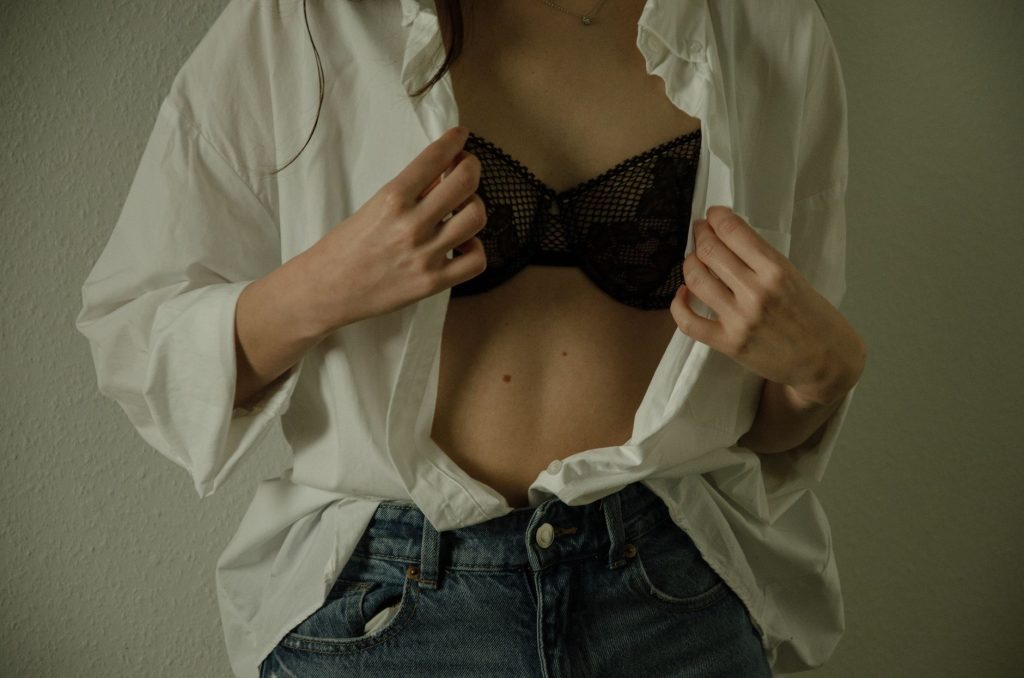
Finding the right bra size is essential for comfort and confidence, yet many women struggle with measuring their correct bra cup size. Knowing how to accurately assess your bust size not only helps in choosing the right fit but also enhances your overall silhouette.
This comprehensive guide will teach you step-by-step how to measure your bra cup size at home. We’ll also cover tips on finding the perfect bra, different bra styles, and when to seek professional fitting assistance.
How To Measure Bra Cup Size?
To measure your bra cup size accurately, you need two measurements: your band size and your bust size. The difference between these measurements determines your cup size.
Preparing for the Measurement
Before you begin measuring, ensure you have the following tools on hand:
- A soft measuring tape
- A notepad or device to jot down your measurements
- A comfortable, non-padded bra or no bra at all for accuracy
Wear a form-fitting top or simply stand in front of a mirror to visually assess your measurements.
Step-by-Step Guide to Measuring Your Bust Size
Follow these steps to measure your bust size correctly:
- Stand upright with your arms relaxed at your sides.
- Wrap the measuring tape around the fullest part of your bust. Make sure the tape is parallel to the floor and not too tight or too loose.
- Take note of this measurement in inches. Round to the nearest whole number.
Step-by-Step Guide to Measuring Your Band Size
Once you have your bust measurement, it’s time to measure your band size:
- Wrap the measuring tape around your ribcage, just below your bust. Ensure it is snug but not tight.
- Round this number to the nearest whole number. If it’s an odd number, add one inch to get your band size.
Calculating Your Cup Size
Now that you have both measurements, calculate your cup size:
Subtract your band size from your bust size:
- Less than 1 inch: A cup
- 1 inch: B cup
- 2 inches: C cup
- 3 inches: D cup
- 4 inches: DD or E cup
- 5 inches: DDD or F cup
- 6 inches: G cup
- 7 inches: H cup
- 8 inches: I cup
Examples
Here are a couple of hypothetical examples to illustrate the process:
- If your band size is 34 inches and your bust size is 36 inches, the difference is 2 inches, which would make you a C cup.
- If your band size is 36 inches and your bust size is 40 inches, the difference is 4 inches, signaling a DD cup size.
Understanding Your Bra Size
Now that you have successfully measured your bra cup size, it’s important to understand what your size represents. For example, if you determine you are a 34C, the “34” represents your band size (the measurement below your bust), while the “C” indicates your cup size, which corresponds to the fullness of your bust compared to your band size.
Common Bra Sizes
It’s worth noting that bra sizes range significantly. Here are some common sizes you may encounter:
- A cup: 30A, 32A, 34A, 36A, etc.
- B cup: 30B, 32B, 34B, 36B, etc.
- C cup: 30C, 32C, 34C, 36C, etc.
- D cup: 30D, 32D, 34D, 36D, etc.
- DD cup: 30DD, 32DD, 34DD, 36DD, etc.
When to Get Professionally Fitted
While measuring yourself can be helpful, it’s important to note that sometimes a professional fitting may offer additional insights:
- If you have experienced significant weight fluctuations that may impact your size.
- If you have recently undergone surgery or changes in health.
- When purchasing a new style of bra that you’re unfamiliar with.
Professional fitters can offer expert advice and help you try on various styles to find the perfect fit for your body shape.
Choosing the Right Bra Style
Understanding your bra size will help you select the right bra style suited to your comfort and fashion needs:
- Bralettes: Ideal for smaller busts or casual wear, bralettes offer a lighter support without underwire.
- Underwire bras: Provide structure and shape, perfect for full support and lifting.
- Sport bras: Designed for activity, providing comfort and support during workouts.
- Strapless bras: Essential for off-shoulder, racerback, or halter styles.
- T-shirt bras: Perfect for everyday wear, offering a smooth finish under clothing.
Common Bra Fit Issues
When you find a bra that matches your measurements, be mindful of common fit issues:
- Band rides up the back: This may mean the band size is too loose.
- Cup overflow: You may need a larger cup size if you experience spillage.
- Underwire digging: If the underwire causes discomfort, your band might be too small.
- Straps falling off shoulders: This could indicate your band size is too large, or the straps need adjustment.
Maintaining Your Bras
To ensure longevity in your bras, proper care is essential. Here are a few care tips:
- Hand wash bras with mild detergent and cold water, or use a lingerie bag if machine washing.
- Avoid using fabric softeners, which can degrade elasticity.
- Never wring or twist bras; gently press excess water out.
- Always air dry bras flat to maintain their shape.
Understanding Bra Size Variations
It’s important to note that different brands may have slight variations in their sizing and cuts. It’s always advisable to try on several options within your size to see which fit best. Additionally, certain styles may fit differently due to design elements.
Finding Your Style
Looking good starts with a great foundation. You may prefer seamless styles for a smooth look under clothing while others may enjoy lace and embellished options for a touch of glamour. Experiment to discover what works for your wardrobe, preferences, and lifestyle.
Conclusion
Measuring your bra cup size is an empowering step toward finding the right fit and support that enhances your overall style. Remember, proper fitting and care can dramatically transform your comfort and silhouette.
For a deeper understanding of how to figure out your entire bra size, including band width, visit this guide. If you’re curious about the biggest bra sizes available in the market, check out this discussion.