
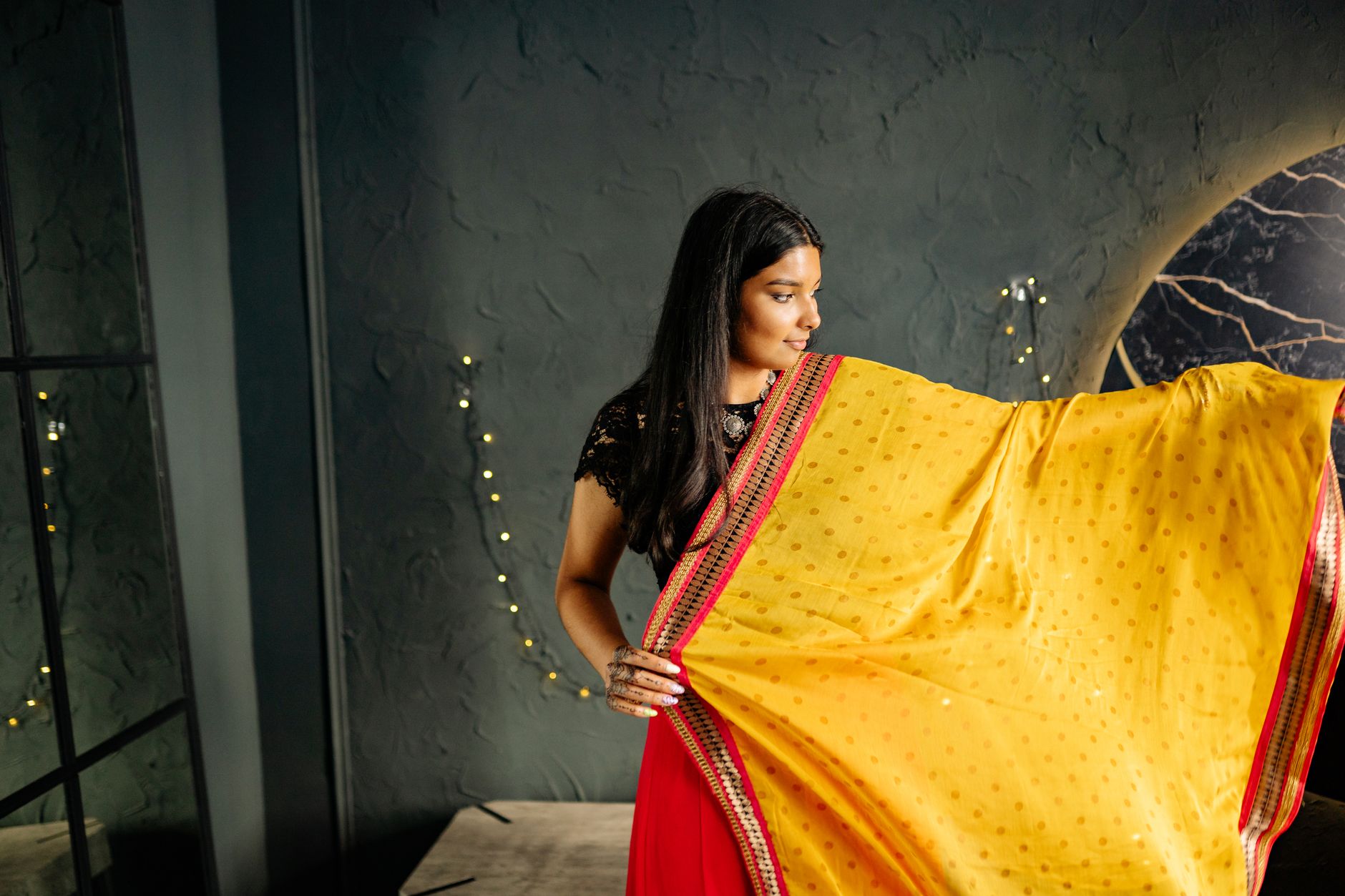
The sari is a versatile and elegant garment that has been an integral part of South Asian culture for centuries. With its rich textile heritage and myriad draping styles, the sari offers endless possibilities for personal expression. Whether attending a wedding, a formal affair, or simply dressing up for a casual outing, knowing how to wear a sari can elevate your outfit and transform your look.
This article will guide you through the different styles of draping a sari, tips for accessorizing, outfit ideas for various occasions, and care instructions to keep your beautiful pieces vibrant and long-lasting.
How To Wear A Sari?
Wearing a sari involves wrapping a length of fabric around the body in a specific style, traditionally around five to nine yards long. The process can appear complex at first, but with some practice and understanding, it becomes intuitive and rewarding.
Choosing the Right Sari
The first step in wearing a sari is selecting the right one for the occasion. Here are some important factors to consider:
- Fabric: Saris come in a variety of fabrics like silk, cotton, chiffon, and georgette. Choose fabrics based on weather, comfort, and occasion.
- Color: Consider the event’s mood and your personal style. Vibrant colors and traditional patterns are ideal for festive occasions, while muted tones work well for formal settings.
- Style: There are numerous sari styles like Banarasi, Kanjeevaram, and Chikankari, each representing different regions and cultures. Select one that resonates with your taste or the event’s theme.
Basic Draping Styles
Here are some popular draping styles to get you started:
Nivi Draping Style
The most commonly used style, Nivi draping, originates from southern India. It creates a sleek silhouette and is easy to wear.
- Start by tucking the pallu (the decorative end of the sari) into the petticoat on your left side.
- Wrap the sari around your waist, leaving a few pleats in front.
- Once wrapped, tuck in the excess fabric at the waist to secure.
- Take the pallu and drape it over your shoulder, allowing it to flow behind you.
- Adjust the pallu’s length on the shoulder to your preference.
Gujarati Draping Style
This style features the pallu worn at the front instead of over the shoulder, providing a distinct and vibrant look.
- Tuck the sari into your petticoat, leaving the pallu hanging down.
- Wrap the sari around your waist, allowing the pallu to fall in front.
- Make pleats of the pallu, securing it at your shoulder in a forward style.
- This style works well with heavier fabrics and is ideal for weddings or ceremonies.
Maharashtrian Draping Style
This style is characterized by a distinctive drape, often featuring a full-bodied look.
- Tuck the sari into your petticoat and wrap it around your body once.
- Bring it to the front and take the end to create a series of pleats, securing them neatly.
- The pallu is then draped over the shoulder with the pleats showcased on the front.
Picking the Right Accessories
Accessories can elevate your sari look. Here are some suggestions:
Jewelry: Traditional Indian jewelry like statement earrings, necklaces, and bangles offer authenticity. For a modern twist, consider minimalist pieces paired with your sari.- Footwear: Choose comfortable shoes like juttis or sandals that reflect the sari’s style. Avoid overly casual footwear as it can detract from your outfit.
- Handbags: Opt for clutches or potli bags that complement your sari’s color and fabric, adding a chic finishing touch.
- Dupatta: For an extra layer of elegance, consider draping a dupatta that complements or contrasts with your sari.
Creating a Cohesive Look: Outfit Ideas
Here are some outfit combinations based on different occasions:
Casual Look
For a relaxed setting or festive gathering, consider a light cotton or chiffon sari.
- Sari: Light cotton or chiffon in pastel shades
- Petticoat: Firm but matching color
- Footwear: Comfortable sandals with minimal embellishment
- Accessories: Simple ear studs and a delicate bracelet
This look is perfect for weekend get-togethers or family events.
Office Look
Dressing up for work? Opt for a cotton sari in neutral tones for a professional vibe.
- Sari: Darker solid color or subtle checks
- Petticoat: Matching or slightly contrasting
- Footwear: Classic loafers or pumps
- Accessories: Minimalist watch and stud earrings
This look is office-appropriate yet expressive.
Formal Look
When attending weddings or formal occasions, a silk or embellished sari can be striking.
- Sari: Silk or georgette with intricate designs
- Petticoat: An embroidered version to match
- Footwear: Traditional embellished sandals or heels
- Accessories: Statement jewelry pieces like chandelier earrings and multiple bangles
This ensemble shines during celebrations and festive events.
Seasonal Dressing
It’s essential to adapt your sari style to seasonal changes for comfort and practicality.
- Summer: Light fabrics such as cotton and chiffon are ideal for warmer months. Choose lighter colors that reflect sunlight.
- Winter: Heavier materials like silk can keep you warm. You may layer with a shawl or a fitted jacket. Darker shades are often favored during colder months.
Garment Care Tips
To ensure your saris remain vibrant and long-lasting, follow these care instructions:
- Washing: Always check the care label. Hand wash delicate fabrics in cold water with mild detergent.
- Drying: Avoid hanging saris in direct sunlight; instead, lay flat in a shaded area to avoid fading.
- Ironing: Use a low-temperature iron on the reverse side of the fabric. For silk, placing a cotton cloth between the iron and the sari is advisable.
- Storage: Store saris folded in cotton or muslin bags to avoid creasing and protect against dust.
Fashion History and Cultural Significance
The sari’s history is both rich and fascinating, rooted in South Asian tradition. Originating over 5,000 years ago, it has evolved from simple draped garments into a diverse cultural statement that varies in style and technique across regions.
From the historically significant Banarasi weave to the colorful Kanjeevaram designs, each sari embodies stories of tradition and craftsmanship. As fashion evolves, many contemporary designers now blend traditional techniques with modern silhouettes, keeping the sari relevant in modern fashion.
Shopping for Saris
When looking to invest in saris, consider the following tips:
- Local Markets: Explore local markets for traditional options that showcase craftsmanship.
- Online Shopping: Research reputable websites that specialize in ethnic wear and check customer reviews for quality assurance.
- Fabric Feel: If possible, touch the fabric before purchasing. Know the weight and feel you prefer for comfort.
- Budget: Decide your budget beforehand. Pricing can range from affordable cotton to high-end silk options.
Adapting for Modest Fashion
For those looking for modest fashion options, the sari can be tailored to suit your comfort level. Consider wearing a fuller petticoat to reduce fabric visibility and select heavier materials for coverage.
Additionally, pairing the sari with a long-sleeved blouse or layering it with cardigans can provide extra coverage while maintaining style.
Inclusivity and Personal Style
The sari is not confined to any specific body type, age group, or gender. Men can also embrace a sari-inspired look through contemporary iterations in menswear. Gender-neutral styles can offer versatility, allowing anyone to express their personal style through draping and fabric choice.
Ultimately, the joy of wearing a sari lies in self-expression. Whether accessorizing with bold traditional jewelry or modern minimalist accents, finding what makes you feel confident is key.
Now that you’re familiar with the art of wearing a sari, why not try one of the outfit combinations suggested? Check out how different styles can enhance your wardrobe, and consider experimenting with accessories that reflect your vibe.
For more insights, explore topics such as the history of saris or dive into how Indian films shape fashion and trends.