Designing clothes may seem daunting, but with some essential skills and creativity, anyone can create their own unique pieces. Understanding the basics of design, fabric selection, pattern making, and garment construction is crucial to develop your own style. This guide will walk you through the process of designing clothes, offering practical advice and tips to help you start your journey.
From brainstorming ideas to sewing the final stitch, each step of the design process is significant. Whether you’re looking to create a capsule wardrobe or a standout piece, mastering the basics will enable you to express your personal style and creativity effectively. Let’s dive into the world of apparel design.
How To Design Clothes?
To design clothes, begin by conceptualizing your ideas through sketching and inspiration boards. Research fabric types, choose a design style that resonates with you, and understand the mechanics of sewing and construction. Developing a unique aesthetic requires experimentation and practice to refine your process.
Understanding the Basics of Clothing Design
Designing clothes successfully begins with a solid foundation in the fundamental principles of design. Here are the core concepts to keep in mind:
- Silhouette: The overall shape of a garment defines its style. Understand different silhouettes that flatter various body types.
- Proportion: The relationship between different design elements, like sleeves’ length and the garment’s hem, can affect how a piece looks.
- Color Theory: Colors can convey emotions and styles. Study the color wheel to create harmonious palettes.
- Textures and Fabrics: Different fabrics have unique drape, weight, and feel. Familiarize yourself with common fabric types and their uses.
- Functionality: Consider how wearable your designs are. They should not only be aesthetically pleasing but also comfortable and practical.
Gathering Inspiration
Start your design journey by collecting inspiration from various sources. This can include:
- Fashion Shows: Watch runway presentations to see emerging trends and innovative styles.
- Street Style: Observe how people dress in your everyday environment.
- Art and Nature: Nature and visual arts can significantly influence design choices through color and form.
- Historical Fashion: Explore different fashion eras for ideas on silhouettes and patterns.
Sketching Your Designs
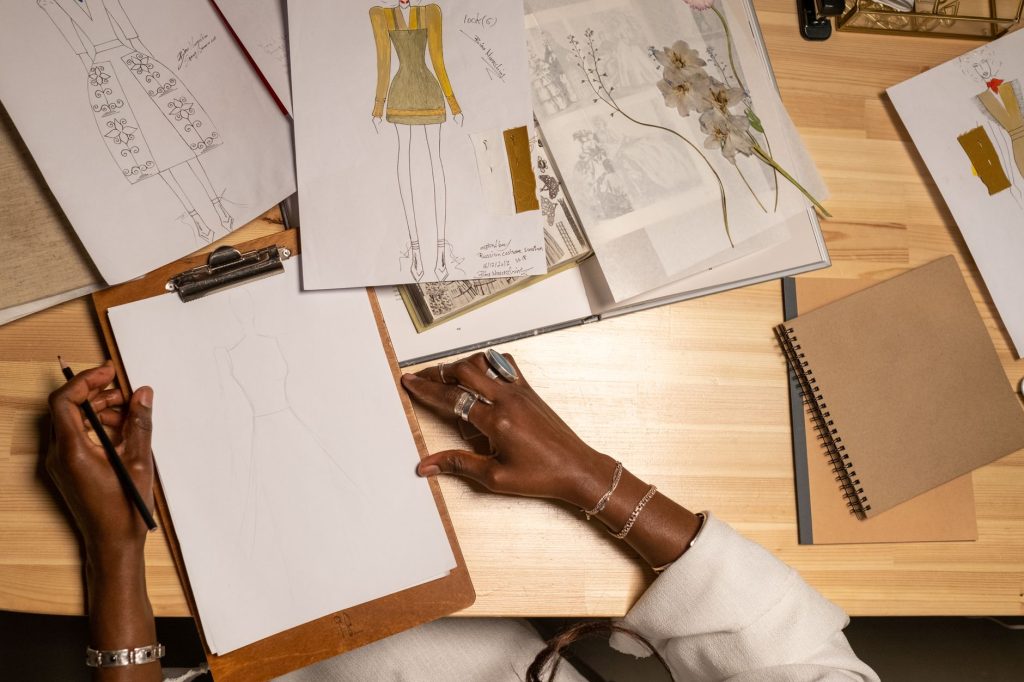
Once you have gathered your inspiration, it’s time to put your ideas onto paper. Sketching allows you to visualize your garments and play with shapes and sizes. Here are some tips for effective fashion sketching:
- Start Simple: Use basic shapes to outline your designs before adding details.
- Focus on Proportions: Pay attention to the length and width of various parts to create a balanced look.
- Incorporate Details: Add elements like seams, buttons, and textures to give personality to your sketches.
- Consider Movement: Think about how the garment will flow when worn, incorporating drape and fit in your design.
Selecting Fabrics and Colors
Fabric selection is crucial in clothing design, as it impacts the garment’s drape, fit, and overall aesthetic. Consider the following:
Types of Fabrics
Fabrics can be classified into various categories:
- Woven Fabrics: These are created by weaving threads together. Examples include cotton, denim, and silk.
- Knitted Fabrics: Made by interlocking loops of yarn, examples are jersey and rib knits.
- Non-Woven Fabrics: Such as felt, these are not made by weaving or knitting and often use bonding techniques.
- Sustainable Fabrics: Consider eco-friendly options like organic cotton, linen, or Tencel.
Choosing Colors
When selecting colors, think about:
- Color Palettes: Create a theme, using complementary or analogous colors to enhance your designs.
- Seasonal Trends: Certain colors may be associated with specific seasons (e.g., pastels in spring).
- Fabric Dyeing: Understand how dyes interact with different materials and how they affect shade and vibrancy.
Pattern Making
Pattern making involves creating templates that determine the shape and style of your clothing. Here are a few methods to consider:
- Flat Pattern Making: Create patterns from existing garments or sketches, using measurements to draft a blueprint.
- Draping: Use fabric on a dress form to experiment with fit and style before making a final pattern.
- Digital Patterns: Software tools allow for precise designs, enabling more complex and innovative creations.
Garment Construction Techniques
Once you have your patterns, it’s time to start constructing your garment. Familiarizing yourself with these sewing techniques is essential:
- Seaming: Understand different seam types, including plain, french, and flat-felled seams, which impact durability and aesthetics.
- Finishing Edges: Techniques like serging and binding prevent fraying and enhance the garment’s professional look.
- Adding Details: Techniques for inserting zippers, buttons, and embellishments can transform the basic garment into something unique.
Fit and Proportion
The fit of a garment can make or break its design. Aim for a balance between form and comfort. Keep the following in mind:
- Measurements: Always take accurate measurements to ensure the garment fits well across different body types.
- Ease: Provide enough room for movement without compromising the design’s structure.
- Test Fitting: Create muslins or prototypes to evaluate how the design fits and make adjustments as needed.
Creating a Capsule Wardrobe
A capsule wardrobe includes essential, versatile pieces that can be mixed and matched. To create your own:
- Select Basics: Choose timeless styles such as a tailored blazer, classic jeans, and white t-shirts.
- Add Statement Pieces: Incorporate a few standout designs that showcase your unique style.
- Coordinate Colors: Create an interconnected color scheme to ensure all pieces complement each other.
- Prioritize Versatility: Look for items that can transition from day to night with simple styling adjustments.
Seasonal Design Considerations
Designing for different seasons requires adaptability and awareness of trends. Consider the following:
Spring/Summer
- Lightweight Fabrics: Opt for breathable materials like cotton, linen, and chiffon.
- Bright Colors: Embrace pastel hues or bright shades that reflect summer vibes.
- Layering Elements: Add lightweight cardigans or shawls for cooler evenings.
Fall/Winter
- Layering Pieces: Focus on heavier fabrics like wool and knits, incorporating layers for warmth.
- Rich, Deep Colors: Use darker shades like burgundy, navy, and evergreen.
- Accessories: Include scarves, hats, and thicker outerwear for both style and function.
Shopping for Materials and Tools
Finding the right materials and tools will greatly affect your design process. Here are some tips for shopping:
- Fabric Stores: Visit local fabric shops or browse online retailers for a wide selection of materials.
- Quality Tools: Invest in good-quality sewing machines, scissors, and creating tools like rulers and marking pens.
- Swatch Cards: Collect fabric swatches to keep track of textures and colors for future projects.
Garment Care and Maintenance
Your designs will look their best with proper care. Here are essential care tips:
- Read Care Labels: Always follow the manufacturer’s instructions for washing and drying.
- Store Properly: Use padded hangers for delicate items and fold heavier pieces to maintain their shape.
- Repair Skills: Learn simple sewing repairs to keep your designs in good shape for longer.
Sustainable Fashion Practices
As a designer, consider incorporating sustainability into your work. It can involve:
- Eco-Friendly Fabrics: Explore organic cotton and recycled materials.
- Minimal Waste Patterns: Create patterns that utilize fabric effectively to minimize waste.
- Timeless Designs: Focus on designs that transcend trends to promote longevity.
Common Mistakes to Avoid in Clothing Design
While learning to design clothes, be aware of these common pitfalls:
- Neglecting Fit: Prioritize fit over aesthetics to create a garment that people want to wear.
- Overcomplicating Designs: Sometimes, simplicity creates the most powerful statement.
- Ignoring Target Audience: Design with your audience in mind to ensure market relevance.
Finalizing Your Designs
Once you’ve created your design, take the time to finalize it. This may include:
- Prototype Testing: Sew a prototype to assess how well it translates from the design stage to wearable garment.
- Feedback: Seek opinions on fit, style, and fabric choice from trusted individuals.
- Adjustments: Don’t hesitate to tweak your design based on feedback and your observations during prototype testing.
Designing clothes requires passion, practice, and a keen eye for details. By embracing your creative side and following this guide, you’ll be well on your way to creating clothes that reflect your personal style. Start by sketching your ideas and experimenting with fabrics and patterns — every stitch is a step toward realizing your fashion vision.
Explore related fashion guides and styling articles like how to style floral dresses and how to layer clothes stylishly to enhance your personal style journey!